
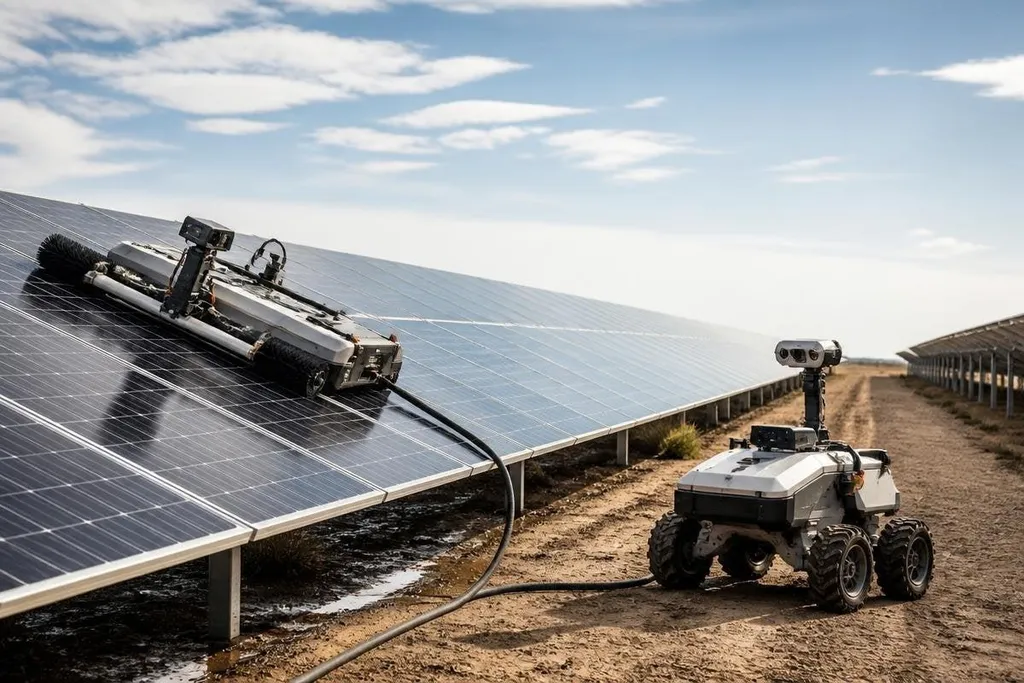
A solar robot can keep working where a wired machine cannot, but sunlight alone doesn't solve the hard parts. The designs worth watching connect power use, movement, cleaning, and repair into one working system.
- Solar panels tied to low-power tasks
- Cleaning robots built for dry dust
- Inspection machines that spot damage early
Solar power has to match the task
Solar robotics starts with a basic limit: a panel gives power only when light reaches it. Driving, lifting, heating a tool, or running a camera may need more power than its panels can make at that moment.
That makes the battery part of the design, not an afterthought. The robot needs enough stored power for shaded areas, cloudy periods, startup loads, and the return trip to a charging point.
A small inspection robot may spend most of its time sensing and moving slowly, while a cleaning robot needs extra energy for brushes, pumps, or suction. The useful measure is work completed per unit of stored energy. A robot that moves slowly but covers the needed area can make better use of sunlight than a faster machine that spends much of its battery on travel.
Cleaning panels without wasting water
Dust lowers the light reaching a solar panel. A cleaning robot can use a brush, an air system, water, or a combination of these methods. Each choice changes the robot's weight, power draw, and repair needs.
Dry cleaning is worth watching in places where water is scarce. The design still has to control dust, avoid scratching the panel surface, and keep its brush or air path clear. A small fault in the cleaning head can leave a strip of dirty panels behind, so the machine needs a way to check its own work.
That check may come from a camera, light sensor, or power reading from the panel. The robot can compare the result before and after a cleaning pass, then send a record to the operator. A cleaning claim without that record is hard to judge.
Inspection robots can find small faults
Solar sites contain long rows of panels, cables, support frames, and inverters. A robot with cameras or thermal sensors can inspect those parts without sending a person through every row.
The useful output is a location and a reason for the alert. A thermal image may point to a hot cell, loose connection, or damaged cable. A regular camera may find a cracked panel, bent frame, or plant growth that blocks the panel surface.
The robot also needs accurate movement. Global positioning can help outdoors, but rows may look alike and signals can weaken near metal structures. Wheel encoders, cameras, or LiDAR can help the robot keep its position and return to the same panel later.
When a solar robot stops between panel rows, the unfinished work is only part of the problem. A report from Robot 24 can name the robot, site, test date, and recovery method, giving you facts to check when a machine cannot return on its own.
The hard part is recovery
A solar robot must handle problems without a person standing beside it. A wheel can slip. A brush can collect debris. A sensor can lose its reading. A panel row can be blocked by a gate, cable, or uneven ground.
Recovery rules matter more than a smooth demonstration. The robot should stop safely, report its location, and give an operator enough detail to send help. If it can reverse, retry a short route, or return to a known point, the site needs fewer manual checks.
The unproven area is long-term service. Solar sites expose machines to dust, heat, rain, and repeated vibration. A design may work well for a short trial and still need new brushes, seals, wheels, or batteries sooner than the site owner planned.
A buying checklist for solar sites
Use these checks before treating a solar robot as ready for routine work:
- Match the task: List the area, surface, slope, dust type, and work hours the robot must handle.
- Check the energy path: Ask how the robot charges, where it stores power, and what happens during low light.
- Measure the result: Require a record of cleaned panels, flagged faults, missed rows, and stopped runs.
- Plan recovery: Confirm how an operator finds a stalled robot and how the robot leaves a blocked route.
- Price the service work: Include brush wear, battery replacement, sensor cleaning, software support, and transport.
- Ask for long trials: A short demonstration cannot show how seals, wheels, and brushes age outdoors.
I'd watch systems that make their work easy to check. A robot that leaves a clear inspection record gives a site owner something useful to compare against labor, water, and lost energy.
The next real test is simple: can a solar robot finish repeat jobs through dust, shade, and sensor faults, then show exactly what it did?