
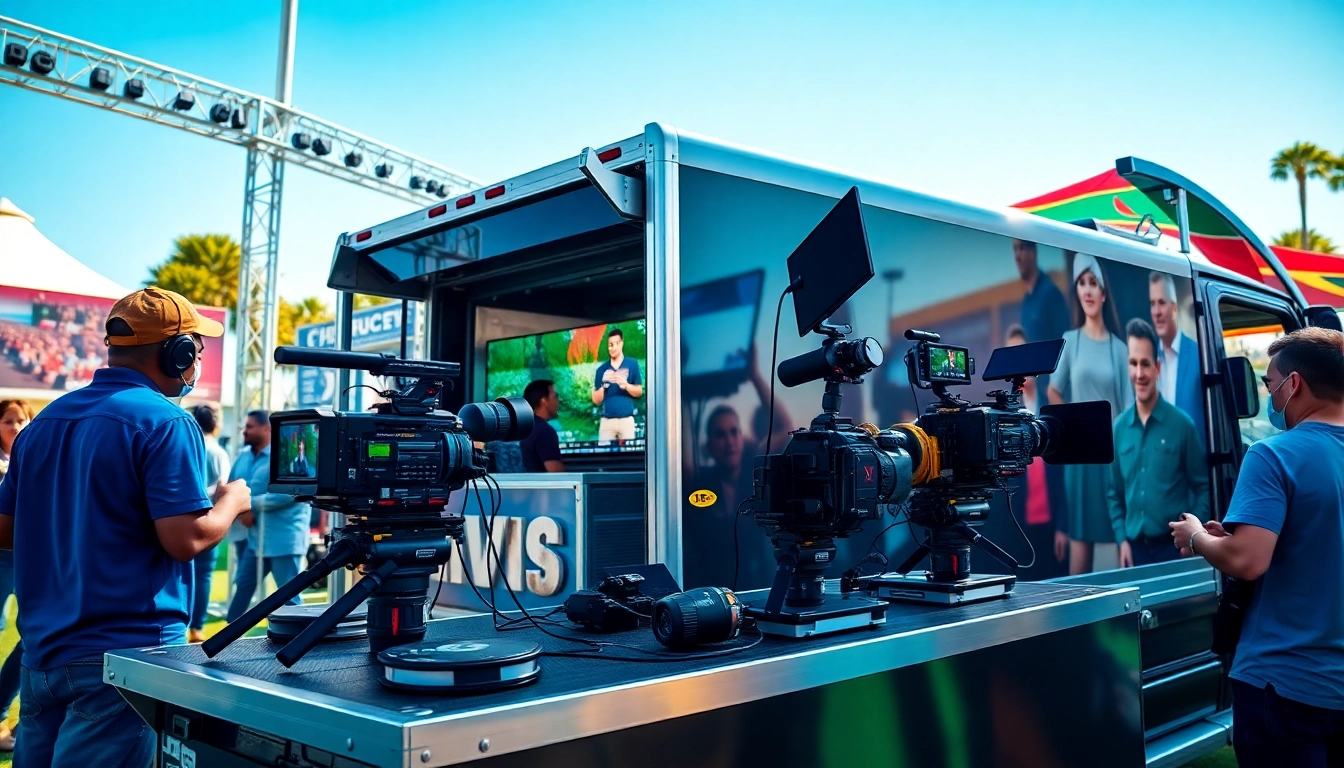
Understanding Mobile Production Services
Definition and Importance
Mobile production services refer to the integration of advanced broadcasting technology with portable units that enable the filming and streaming of live events from various locations. This service has become increasingly crucial in today’s digital age, where real-time content consumption is paramount. With mobile production, organizations can deliver high-quality programming directly to audiences via television or online platforms, enhancing their visibility and outreach. By utilizing mobile production services, companies can produce everything from sports broadcasts and corporate events to concerts and documentaries, bringing viewers closer to the action than ever before.
Applications in Various Industries
The versatility of mobile production services spans across multiple sectors. In the sports industry, these services allow for live broadcasts, ensuring that fans can catch every moment of the game, wherever they are located. For corporate events, live streaming capabilities enable businesses to reach global audiences, facilitating instantaneous engagement. Entertainment industries also leverage mobile production for concerts, festivals, and theatrical performances, ensuring high-quality viewing experiences for fans worldwide. Furthermore, educational entities use mobile production for remote learning and conferences, bridging gaps in accessibility.
Key Components of Mobile Production
The core components of mobile production services include broadcasting trucks, camera equipment, audio systems, and streaming protocols. Broadcasting trucks are equipped with cutting-edge technology to handle live feeds, video switching, and graphics integration, essential for professional broadcast quality. High-definition cameras and professional audio equipment ensure that every detail is captured and relayed with clarity. Moreover, robust streaming protocols are critical for delivering content reliably and maintaining viewer engagement across various platforms.
Core Equipment for Mobile Production Services
Cameras and Lighting Solutions
Cameras serve as the heart of mobile production, with advancements in technology leading to increasingly sophisticated options. High-definition (HD) and even 4K cameras are now commonplace in mobile units, capable of delivering broadcast-quality footage. Additionally, lighting solutions are paramount for ensuring that all visuals present well on screen. Mobile production typically involves various lighting setups—from basic LED lighting to more complex rigging systems that allow for adaptable light configurations depending on event requirements. The choice of equipment should align with environmental factors such as natural light availability and the desired atmosphere of the production.
Audio Equipment Essentials
Audio quality is crucial in any production, with sound significantly impacting viewer experience. Essential audio equipment within mobile production services includes microphones (lapel mics, boom mics, shotgun mics), mixing consoles, and soundboard systems. These tools work together to ensure clear communication and audio fidelity during live broadcasts. Moreover, audio monitoring equipment helps technicians manage sound levels, ensuring that everything from dialogue to background music enhances the overall production without disrupting the viewing experience.
Transport and Setup Considerations
Transport considerations are paramount for the successful execution of mobile production services. From logistics planning to route optimization, understanding the transport needs for equipment and personnel is vital. The setup process involves coordinating equipment placement, ensuring optimal visibility for cameras, and arranging audio systems to allow seamless integration with broadcasting tools. Every aspect must be meticulously planned and executed, as efficient transport and setup play a critical role in adhering to tight event schedules.
Planning and Execution of Live Events
Pre-Event Preparation Strategies
Effective planning is the foundation of every successful live event. Initial strategies should include extensive pre-event meetings with stakeholders to clarify goals and expectations. Establishing a comprehensive production schedule that lays out key milestones—from equipment loading to final setup—can prevent potential delays. Coordination with venues is also essential to understand infrastructure limitations and requirements, such as power supply and layout considerations. Engaging in thorough rehearsal processes allows the production team to troubleshoot issues, ensuring a smooth delivery on event day.
On-Site Coordination Best Practices
During the event, on-site coordination becomes vital for managing all aspects of production. An experienced production manager should oversee all operations, ensuring crew members are well-informed of their roles and responsibilities. Communication tools, such as headsets and walkie-talkies, facilitate real-time coordination, enabling swift resolution of any arising issues. To minimize disruptions, it’s essential to have dedicated zones for technical operations, keeping equipment organized and accessible.
Post-Event Analysis and Feedback Loops
After a live event, the focus should shift to assessing performance and gathering feedback. Post-event analysis involves reviewing footage to evaluate audio-visual quality and overall production effectiveness. Engaging with stakeholders for their observations provides insights into any areas of improvement for future events. Documenting these findings creates a framework for continuous improvement, refining both the planning process and execution for subsequent projects.
Challenges in Mobile Production Services
Technical Difficulties and Troubleshooting
Despite meticulous planning, technical difficulties can arise during mobile production. Issues might range from equipment failure to connectivity problems. Having a qualified technical team on-site is critical for immediate troubleshooting. Implementing backup systems—from auxiliary audio systems to alternative streaming channels—can mitigate the potential impact of such failures on the broadcast. It’s vital to conduct routine maintenance on equipment and to have spare components available to address any unforeseen issues swiftly.
Logistical Challenges and Solutions
Logistical challenges can significantly hinder the production process. Factors such as adverse weather conditions or venue accessibility may affect equipment transport and setup. Effective logistical management necessitates contingency planning, such as alternative transport routes for equipment or different venues when faced with unavoidable circumstances. Collaborating with skilled logistics professionals who understand the nuances of mobile production can further enhance the ability to navigate these challenges efficiently.
Budgetary Considerations for Events
Budget constraints remain a continuous challenge for many productions. Critical considerations include the cost of equipment rental, transportation, personnel, and permits. Creating a detailed financial projection outlining expected costs provides a framework for managing resources effectively. The flexibility to adjust production elements without compromising quality can also enable teams to achieve budgetary goals while still delivering valuable content. For ongoing productions, assessing the return on investment (ROI) from previous events can guide budgeting decisions for future productions.
Future Trends in Mobile Production Services
Technological Innovations Impacting Production
The future of mobile production services is being shaped by rapid technological advancements. Innovations such as 5G connectivity are revolutionizing how live events are broadcasted, reducing latency and improving overall streaming quality. Additionally, the advent of virtual and augmented reality technologies is allowing producers to create immersive experiences that engage viewers more deeply than traditional formats. Keeping abreast of these trends will empower production teams to better meet audience expectations and deliver cutting-edge content.
Emerging Formats and Viewership Trends
Viewership trends are continually evolving, prompting mobile production services to adapt rapidly. Audiences are increasingly gravitating towards on-demand content and interactive formats, such as live polls and Q&A sessions. This shift necessitates that production teams explore innovative ways to capture viewer engagement and retain audience interest. By incorporating these formats into live broadcasts, organizations can create a more interactive experience that resonates with modern viewers.
Environmental Sustainability in Production Practices
As awareness of environmental issues grows, sustainability is becoming a crucial focus in the production industry. Mobile production services can adopt eco-friendly practices by utilizing energy-efficient equipment, minimizing waste, and exploring carbon offset options. These sustainable practices not only benefit the environment but also resonate with audiences who prioritize corporate responsibility. Implementing sustainability initiatives can enhance brand image while contributing positively to the planet.