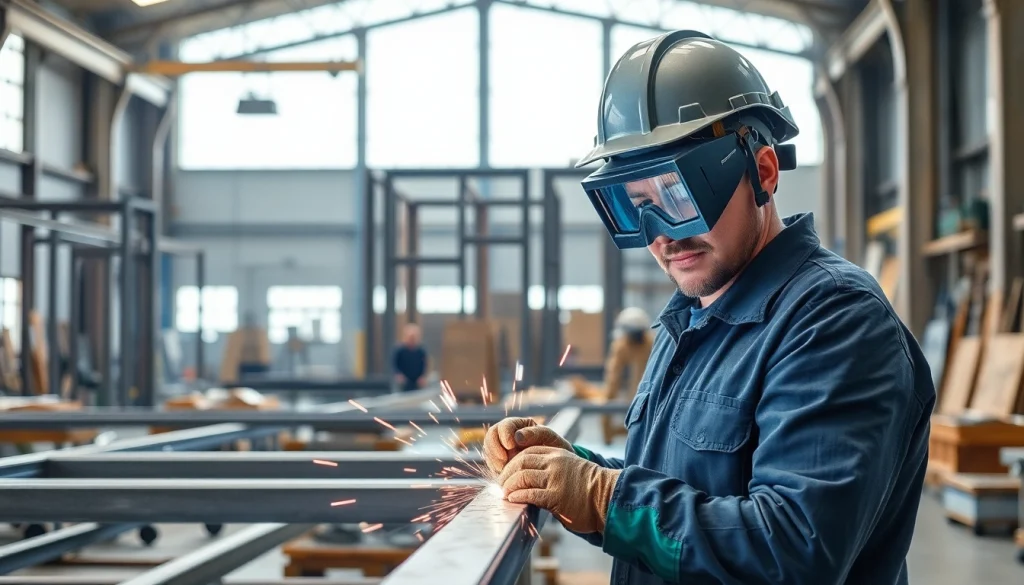
Understanding Structural Steel Welding Fundamentals
What is Structural Steel Welding?
Structural steel welding is a specialized process that involves the joining of metal parts, primarily using high-strength steels, to form a cohesive, robust structure. This technique is critical in constructing frameworks for buildings, bridges, and various infrastructures, where the integrity and longevity of the weld joints are paramount. Through methods such as arc welding, MIG (Metal Inert Gas) welding, and TIG (Tungsten Inert Gas) welding, welders can fuse different steel sections together, ensuring their load-bearing capabilities meet the standards set by industry regulations.
Importance of Quality in Structural Steel Welding
Quality in structural steel welding is not merely an option; it is a necessity. Poor welding can lead to catastrophic failures, resulting in significant financial loss, injuries, or even fatalities. High-quality welding ensures the following:
- Structural Integrity: Proper welding techniques reinforce joint strength, allowing the structures to withstand various loads and stresses throughout their lifecycle.
- Safety: Adhering to established welding standards minimizes risks associated with welding defects, protecting workers and the public.
- Regulatory Compliance: High-quality welding aligns with industry regulations, ensuring the structures are built to code and avoid legal penalties.
- Cost Efficiency: Investing in quality welding reduces the need for repairs and maintenance, ultimately saving money in the long term.
Common Types of Structural Steel Welding
There are several welding techniques used in structural steel applications, each with unique advantages and scenarios for optimal use. The most common methods include:
- Shielded Metal Arc Welding (SMAW): Also known as stick welding, it’s highly versatile and widely used for various metal types, including rusty or dirty surfaces.
- MIG Welding (Gas Metal Arc Welding): Renowned for its speed and ease of use, MIG welding involves feeding a continuous wire electrode through a welding gun, ideal for thinner materials.
- TIG Welding (Gas Tungsten Arc Welding): Offering excellent precision, TIG is suitable for thin sections and non-ferrous metals, providing high-quality welds.
- Flux-Cored Arc Welding (FCAW): This process combines elements from both MIG and SMAW, using a tubular wire filled with flux, making it effective for outdoor applications.
Essential Tools and Equipment for Structural Steel Welding
Welding Machines and Their Applications
The foundation of any successful welding operation is a reliable welding machine. The choice of machine depends on the specific welding process being employed:
- MIG Welders: Typically gas-operated, these machines excel in making quick, clean welds for automotive and thin-plate work.
- TIG Welders: These machines require a higher skill level but are praised for their precision in procedures such as aerospace and medical component manufacturing.
- Stick Welders: Simple and robust, stick machines are perfect for fieldwork and repairs due to their portability and ability to weld in various conditions.
- Multi-process Welders: Versatile machines that support multiple welding processes, making them ideal for dynamic welding environments.
Protective Gear and Safety Measures
Safety is a crucial concern in structural steel welding. The intense heat, ultraviolet light, and fumes produced during welding can pose significant health risks. Essential safety equipment includes:
- Welding Helmet: Protects the face and eyes from radiant energy and sparks.
- Gloves: Heavy-duty gloves safeguard hands from heat and flame.
- Protective Clothing: Flame-resistant clothing minimizes burn risks and protects against sparks.
- Respirators: When working in enclosed spaces or with hazardous fumes, respiratory protection is vital for worker health.
Additionally, following established safety protocols, including keeping work areas organized and ensuring proper ventilation, significantly reduces welding hazards.
Accessories to Enhance Welding Efficiency
Using the right accessories can improve welding efficiency and outcome quality. Key accessories include:
- Welding Clamps: Essential for securing materials during welding, preventing movement that can compromise weld quality.
- Welding Tables: Provides a stable surface for precise work, equipped with fixtures to hold materials in place.
- Fume Extractors: These devices eliminate harmful fumes created during welding, ensuring a safe working environment.
- Electrode Holders and Ground Clamps: These tools improve connection stability during the welding process.
Techniques to Master Structural Steel Welding
Popular Welding Techniques and Their Uses
Different techniques cater to various aspects of structural steel welding. Mastery of these techniques enhances versatility and effectiveness:
- Stringer Bead: Involves moving the electrode in a straight line, producing a narrow bead but is efficient for creating several joints in a row.
- Weave Pattern: For wider, multi-pass welds, the weave technique can enhance penetration and fusion in thicker extrusions.
- Backhand vs. Forehand Technique: The choice between these two approaches can influence bead profile, penetration depth, and overall finish quality.
Best Practices for Seam Quality and Durability
Ensuring welds are durable involves adhering to best practices. Here are several critical factors to consider:
- Surface Preparation: Clean surfaces from rust, oil, and contaminants before welding for better adhesion.
- Correct Heat Settings: Adjust the voltage and amperage settings on your welding machine to suit the specific material thickness and type.
- Consistent Travel Speed: Maintaining a uniform pace while welding prevents defects such as burn-through or undercutting.
- Proper Filler Material: Use the appropriate filler material compatible with the base metal to ensure strong seams.
Troubleshooting Common Welding Issues
Despite best efforts, issues can arise during welding. Here are some common problems and their solutions:
- Porosity: Caused by trapped gases in the weld pool, it can be minimized by ensuring good joint cleanliness and adjusting gas flow rates.
- Undercutting: Occurs when the molten metal erodes the base metal, which can be rectified by adjusting welding speed and voltage.
- Inconsistent Bead Appearance: This can indicate poor technique or machine settings issues, necessitating a review of travel speed and machine calibration.
Innovative Approaches in Structural Steel Welding
Advancements in Welding Technology
The welding industry has seen remarkable advancements in technology that enhance efficiency and safety. Some of the noteworthy innovations include:
- Automation: Robotic welding systems streamline processes for repetitive tasks, improving speed and consistency.
- 3D Printing: Emerging technologies allow for the layering of metal, creating shapes that were once challenging to fabricate through traditional methods.
- Real-time Monitoring: Technologies that monitor welding parameters in real time ensure conformity to specifications and immediate troubleshooting.
Case Studies of Successful Welding Projects
Examining successful welding projects can provide insights and inspire best practices. For example:
A landmark bridge project utilized advanced robotic welding technologies, reducing labor costs by 30% while improving weld consistency. The application of AI-driven monitoring systems provided real-time adjustments to parameters, ensuring every weld met high standards.
In another case, a major structural steel building incorporated pre-fabricated panels welded in a controlled environment, ensuring superior weld quality and faster on-site assembly. These case studies illustrate how innovative approaches can yield substantial benefits in structural steel welding operations.
Future Trends in Structural Steel Welding
As the industry evolves, future trends emerging in structural steel welding include:
- Sustainability: Increased focus on eco-friendly practices and materials, leading to the adoption of recyclable metals for new construction.
- Smart Welding: The integration of IoT technology in welding equipment for data collection and predictive maintenance.
- Augmented Reality (AR): Utilization of AR for training and enhancing skills, allowing welders to visualize weld paths and optimal settings.
Measuring Success in Structural Steel Welding Projects
Key Performance Indicators to Track
To evaluate the success of welding projects, specific Key Performance Indicators (KPIs) should be tracked:
- Weld Quality: Assessment through non-destructive testing methods to verify integrity and strength.
- Production Efficiency: Metrics related to the time taken to complete welding tasks versus project timelines.
- Defect Rates: Monitoring and comparing defect rates over time to identify trends and areas for improvement.
Quality Assurance Strategies
Quality assurance plays a pivotal role in maintaining high standards. Approaches include:
- Standard Operating Procedures (SOPs): Develop and adhere to detailed SOPs for all welding processes to ensure consistency.
- Regular Testing: Implement routine checks and inspections to catch defects early and ensure compliance with specifications.
- Continuous Training: Investing in ongoing training for welders to refresh skills and introduce new techniques or technologies.
Feedback and Continuous Improvement
Creating a culture of feedback fosters continuous improvement. Consider:
- Post-Project Reviews: Conduct thorough evaluations after project completion to identify successes and areas for improvement.
- Welder Input: Encourage welders to share insights on challenges faced during projects to implement actionable changes.
- Benchmarking: Compare project outcomes against industry standards or past projects to evaluate competitiveness and efficiency.